
Few things can ruin a day faster than a car breaking down when you least expect it. One moment you’re moving through London’s traffic, planning the rest of your day. The next, you’re sitting on the side of the road with warning lights flashing and a growing sense of frustration.
It happens more often than many drivers think.
Whether you’re commuting into Central London, collecting the kids from school, heading to a business meeting, or making a late-night journey home, vehicle problems rarely arrive with perfect timing. In fact, they seem to appear at exactly the worst moment.
That’s why emergency car repair services have become such an important part of modern driving. They provide quick assistance when your vehicle suddenly refuses to cooperate, helping you get back on the road with as little disruption as possible.
Let’s look at what emergency car repair involves, when you might need it, and how London drivers can handle unexpected vehicle problems with confidence.
When Your Car Decides It’s Had Enough
Cars are remarkably reliable compared to previous generations. Modern vehicles contain sophisticated electronics, intelligent monitoring systems, and advanced engineering designed to keep everything running smoothly.
Yet even the best-maintained vehicle can develop problems.
A battery can fail overnight.
A tyre can pick up a nail.
An alternator can stop charging.
An engine management fault can suddenly trigger limp mode.
Sometimes there’s a warning. Sometimes there isn’t.
You know what? That’s often what makes a breakdown so stressful. The uncertainty catches people off guard. One strange noise turns into another, and before long you’re wondering whether the vehicle can make it another mile.
In a city as busy as London, that uncertainty feels even more intense. Traffic rarely stops for anyone.
The Most Common Emergency Car Repairs
Not every breakdown involves major mechanical failure. In fact, many emergency callouts relate to relatively straightforward issues.
Flat or Dead Batteries
Battery failure remains one of the leading causes of roadside assistance requests.
Cold weather, infrequent use, electrical drain, and simple battery age can all contribute to failure. Drivers often discover the problem early in the morning when the engine refuses to start.
A qualified emergency technician can usually test the battery, perform a jump start, and determine whether replacement is necessary.
Tyre Problems
Potholes, kerb impacts, road debris, and punctures are constant hazards for drivers throughout London.
A damaged tyre may lead to:
- Sudden loss of pressure
- Slow punctures
- Sidewall damage
- Wheel alignment issues
While some situations require a replacement tyre, others can be repaired quickly at the roadside.
Starter Motor Failures
When the starter motor begins failing, the symptoms can seem confusing.
You turn the key.
You hear a click.
Nothing happens.
The battery may appear healthy, but the engine simply won’t crank. Emergency mechanics can often diagnose the fault quickly and recommend the next step.
Alternator Issues
Think of the alternator as the heart of your vehicle’s charging system.
If it fails, the battery gradually loses power until essential systems begin shutting down. Drivers may notice dim headlights, warning lights, or unusual electrical behaviour before the vehicle eventually stops.
Engine Overheating
An overheating engine should never be ignored.
Cooling system leaks, thermostat failures, damaged water pumps, and radiator problems can all cause temperatures to rise rapidly. Continuing to drive may create expensive engine damage that could have been avoided.
First Things First: What To Do During a Breakdown
Panic is natural. Productive? Not really.
The first few minutes after a breakdown are important because they affect both safety and repair outcomes.
If your vehicle develops a problem while driving:
Move to a safe location if possible.
Turn on your hazard lights immediately.
Avoid stopping in dangerous positions or active traffic lanes.
If you’re on a motorway, exit the vehicle safely when appropriate and follow current highway safety guidance.
Once you’re safe, assess the situation calmly.
Is there smoke?
Do you smell fuel?
Is the engine temperature excessively high?
Can the vehicle still move?
These observations can help an emergency repair technician understand the problem before they arrive.
Interestingly, many breakdowns sound dramatic but turn out to be relatively minor. Others seem minor and reveal serious faults. That’s one reason professional diagnosis matters.
London’s Unique Breakdown Challenges
Breaking down anywhere is inconvenient.
Breaking down in London introduces an entirely different set of complications.
Traffic congestion alone creates difficulties for both drivers and repair teams. A vehicle stopped in a busy area can quickly create disruption for surrounding traffic.
Then there are the practical concerns:
- Restricted parking zones
- Congestion-heavy routes
- Bus lanes
- Controlled access areas
- Limited roadside space
- High traffic density
A breakdown in a quiet residential street feels very different from one occurring near Oxford Street during peak hours.
Location matters.
Response times can vary significantly depending on where and when assistance is needed.
Late-night emergencies may actually be easier to reach because traffic levels are lower. Mid-afternoon breakdowns in busy commercial districts can sometimes take longer despite being geographically closer.
It’s one of those strange contradictions that makes perfect sense once you’ve spent enough time driving in London.
Roadside Repair or Recovery: Which Do You Need?
Not every emergency requires towing.
Many faults can be fixed where the vehicle has stopped.
Roadside repairs commonly include:
- Battery replacement
- Jump starts
- Minor electrical repairs
- Diagnostic scanning
- Wheel changes
- Fuel delivery
- Basic mechanical fixes
When repairs become more complicated, vehicle recovery may be the safer option.
For example, major engine damage, transmission failures, severe cooling system faults, or accident-related damage often require workshop facilities.
A trustworthy emergency repair service won’t push unnecessary recovery. They will assess the situation honestly and explain available options.
That transparency matters.
No driver enjoys unexpected repair costs.
The Rise of Mobile Mechanics
A decade ago, many breakdowns automatically meant towing.
Today, mobile mechanics have changed the landscape.
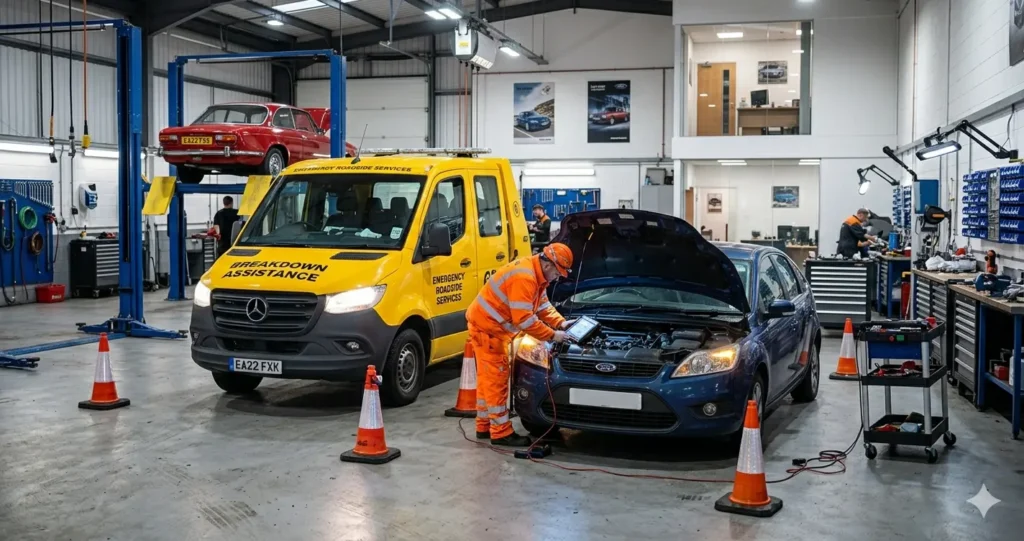
Equipped vans often carry advanced diagnostic tools, replacement batteries, specialist equipment, and commonly needed parts. In many cases, repairs can begin immediately after diagnosis.
Think of it like having a workshop that comes to you.
This approach offers several advantages:
Less waiting.
Reduced towing costs.
Greater convenience.
Faster return to normal travel.
For London drivers juggling work schedules, school runs, appointments, and countless daily commitments, that convenience can be incredibly valuable.
Understanding Emergency Repair Costs
Let’s address the question every driver asks sooner or later.
How much will emergency car repair cost?
The answer depends on several factors.
The vehicle itself plays a role. Luxury vehicles, specialist imports, and newer models often require different parts and diagnostic procedures.
Timing matters too.
An emergency callout at 2 p.m. may cost less than assistance requested at 2 a.m.
Additional factors include:
- Nature of the fault
- Parts required
- Labour time
- Vehicle location
- Recovery requirements
- Day or night service
While nobody enjoys unexpected bills, delaying repairs can sometimes increase overall costs. A failing battery, for instance, is usually cheaper to replace than dealing with repeated breakdowns and recovery fees.
Choosing an Emergency Car Repair Service
Not all providers offer the same level of service.
When evaluating emergency repair companies in London, look beyond pricing alone.
Experience matters.
Response capability matters.
Customer communication matters.
A reliable provider should offer:
Clear Communication
Drivers need realistic expectations.
Good repair services explain estimated arrival times, likely repair scenarios, and potential costs without hiding behind technical jargon.
Qualified Technicians
Modern vehicles contain complex electronics and computer-controlled systems.
Proper training is essential for accurate diagnosis.
Transparent Pricing
Nobody likes unpleasant surprises.
Clear pricing structures help build trust from the beginning.
Positive Customer Feedback
Reviews aren’t perfect, but patterns tell a story.
Consistent praise for professionalism, punctuality, and honesty often indicates a dependable service.
Preventing Emergency Repairs Before They Happen
Here’s the slightly ironic part.
The best emergency repair experience is the one you never need.
Regular maintenance dramatically reduces the risk of unexpected breakdowns.
Simple checks can make a significant difference:
Check tyre pressures monthly.
Monitor fluid levels.
Replace worn batteries before they fail.
Pay attention to warning lights.
Schedule servicing at recommended intervals.
Drivers sometimes ignore small symptoms because the vehicle still works.
A strange vibration.
An occasional warning light.
A squealing belt.
A hesitant start.
Those small signs often represent your vehicle’s way of asking for attention before a larger problem develops.
Seasonal Challenges for London Drivers
Weather plays a bigger role than many people realise.
Winter creates obvious risks.
Battery performance drops.
Tyre pressures fluctuate.
Visibility decreases.
Cold starts place extra strain on components.
But summer can be equally demanding.
Long periods in traffic increase cooling system stress. Engines work harder. Air conditioning systems remain under constant use.
Even autumn presents challenges as wet roads, fallen leaves, and reduced daylight affect driving conditions.
Each season places different demands on a vehicle.
Keeping up with seasonal maintenance can reduce the likelihood of needing emergency assistance.
Technology Is Changing Emergency Repairs
Vehicle diagnostics have evolved rapidly.
Modern technicians often arrive equipped with digital scanning equipment capable of communicating directly with a vehicle’s onboard systems.
Instead of relying solely on mechanical inspection, they can identify fault codes, monitor sensor data, and pinpoint issues with impressive accuracy.
Some vehicles can even transmit diagnostic information remotely before assistance arrives.
It’s a far cry from the days when mechanics relied mainly on sound, smell, and instinct—although experienced technicians still use those skills every day.
Technology helps, but expertise remains the deciding factor.
Final Thoughts
Emergency car repair isn’t something most drivers think about until they need it. Yet when a breakdown occurs, the quality of the response can make a stressful situation feel manageable.
London’s roads are busy, unpredictable, and demanding. Vehicles work hard here. From stop-start traffic and crowded city streets to long motorway journeys beyond the capital, every trip places wear on critical components.
Breakdowns happen.
Even well-maintained vehicles encounter unexpected issues from time to time.
The key is knowing what to do, staying safe, and having access to a trusted emergency repair service when things go wrong.
A fast response, accurate diagnosis, and honest advice can turn a potentially disastrous day into a temporary inconvenience. And honestly, when you’re stranded beside the road watching traffic crawl past, that’s exactly what you want a practical solution, delivered quickly, by someone who knows what they’re doing.