
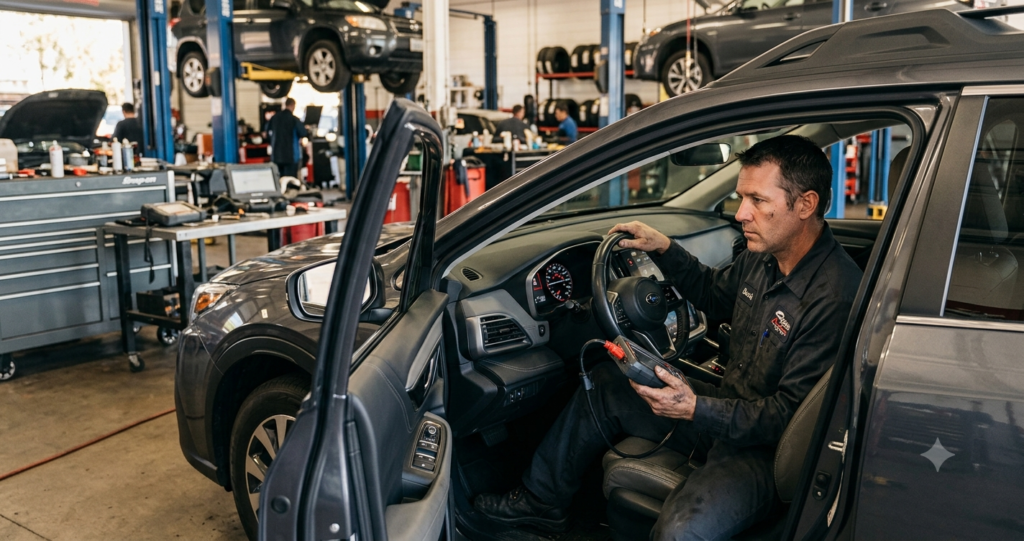
There are few things more unsettling than glancing down while driving and seeing a warning light you don’t recognise glowing on your dashboard. Is it urgent? Can you keep driving? Should you pull over right now? For most drivers, the honest answer is: it depends and without understanding what the light means, it’s impossible to know how seriously to take it.
As an East London garage offering car diagnostics services, we speak to drivers every week who are unsure what their dashboard is trying to tell them. This guide explains the most common warning lights, what they actually mean, how urgent each one is, and how a professional diagnostic check works to get to the bottom of the issue.
How Dashboard Warning Lights Work
Modern cars are managed by an onboard computer system that continuously monitors dozens of sensors everything from engine temperature and oil pressure to tyre pressure and emissions performance. When a sensor detects a reading outside its expected range, the computer stores a fault code and, depending on the severity, illuminates a warning light on the dashboard.
This is important to understand: a warning light isn’t a random glitch it’s a specific signal tied to a specific fault code stored in the car’s computer. A proper diagnostic check retrieves that code, which tells a mechanic exactly what triggered the light and dramatically narrows down the cause, rather than guessing.
Warning lights generally follow a colour-based urgency system:
- Red lights typically indicate a serious issue that needs immediate attention, often meaning you should stop driving as soon as it’s safe to do so.
- Amber/yellow lights usually indicate a fault that needs attention soon, but isn’t necessarily an immediate emergency.
- Green or blue lights are informational, simply confirming a system is active (like fog lights or cruise control).
The Most Common Warning Lights and What They Mean
Check Engine Light (Amber, Engine-Shaped Icon)
This is the most common and most misunderstood warning light. It can be triggered by dozens of different issues, ranging from something minor (a loose fuel cap) to something serious (a failing catalytic converter or engine misfire).
Steady light: Usually indicates a fault that should be checked soon, but isn’t necessarily an emergency. Flashing light: Often indicates an active engine misfire, which can cause damage if you continue driving. Reduce speed and get it checked as soon as possible.
A diagnostic scan is the only reliable way to know which of the many possible causes is behind this light, which is exactly why guessing (or ignoring it) is risky.
Oil Pressure Warning Light (Red, Oil Can Icon)
This light means the engine isn’t receiving adequate oil pressure a genuinely urgent issue. Continuing to drive with low oil pressure can cause rapid, severe engine damage, sometimes within minutes.
What to do: Pull over safely as soon as possible, switch off the engine, and check the oil level if you’re able to. If the level looks fine and the light stays on, do not continue driving arrange for the vehicle to be checked or towed instead.
Battery / Charging System Warning Light (Red, Battery Icon)
This light typically means the alternator isn’t charging the battery properly, rather than a fault with the battery itself. Your car can continue running for a short period on battery power alone, but it will eventually stall once the battery is depleted often with additional symptoms like dimming headlights or a weakening electrical system beforehand.
What to do: Avoid non-essential electrical use (heated seats, stereo, etc.) and get to a garage promptly, since this issue tends to escalate quickly.
Brake Warning Light (Red, Exclamation Mark in Circle, or “BRAKE”)
This can indicate a range of issues, including low brake fluid, worn brake pads, or a fault in the braking system itself. Given that brakes are safety-critical, this light should never be ignored.
What to do: Check whether the handbrake is fully released first, as this is a common false trigger. If the light remains on, avoid driving the vehicle until it’s been inspected, particularly if you also notice reduced braking performance.
ABS Warning Light (Amber, “ABS” Text)
The Anti-lock Braking System prevents wheel lock-up during hard braking. If this light comes on alone (without the main brake warning light), your regular brakes typically still work, but the anti-lock function may not engage properly in an emergency stop.
What to do: Not usually an immediate emergency, but should be checked soon, since ABS plays an important role in maintaining control during sudden braking, especially on wet roads.
Tyre Pressure Warning Light (Amber, Exclamation Mark in Horseshoe Shape)
This indicates one or more tyres has fallen below the recommended pressure. It’s often simply due to natural pressure loss over time or a temperature drop, but it can also indicate a slow puncture.
What to do: Check tyre pressures as soon as practical and inflate to the recommended level. If the light returns quickly after inflating, there may be a leak worth investigating.
Engine Temperature Warning Light (Red, Thermometer Icon)
This means your engine is overheating a genuinely urgent issue. Continuing to drive an overheating engine risks serious, expensive damage, including a warped cylinder head or blown head gasket.
What to do: Pull over safely, switch off the engine, and allow it to cool before checking coolant levels. Do not open a hot radiator cap. If overheating happens repeatedly, it needs a proper diagnostic check to find the root cause.
Airbag Warning Light (Red, Person with Circle)
This indicates a fault in the airbag or seatbelt pretensioner system, meaning the airbags may not deploy correctly in a collision. While it doesn’t affect drivability, it’s a safety-critical fault.
What to do: Book a diagnostic check as soon as reasonably possible. This isn’t an issue to leave unresolved for an extended period.
Power Steering Warning Light (Red or Amber, Steering Wheel with Exclamation Mark)
This usually indicates a fault in the power steering system, which can make the steering noticeably heavier, particularly at low speeds.
What to do: The car is usually still driveable, but manoeuvring becomes more physically demanding. Get it checked soon, especially before any longer journeys.
EPC Warning Light (“Electronic Power Control”)
Common in some manufacturers’ vehicles, this light relates to the engine management and throttle control systems. It can range from a minor sensor fault to a more significant issue affecting engine performance.
What to do: If the car feels like it’s lost power or is behaving unusually, treat this as more urgent. A diagnostic scan will identify the specific cause.
Quick Reference: Should I Stop Driving?
| Warning Light | Stop Immediately | Get Checked Soon | Informational Only |
| Oil pressure (red) | ✔️ | ||
| Engine temperature (red) | ✔️ | ||
| Brake warning (red) | ✔️ (if performance affected) | ||
| Check engine (flashing) | ✔️ | ||
| Check engine (steady) | ✔️ | ||
| Battery/charging | ✔️ (promptly) | ||
| ABS | ✔️ | ||
| Tyre pressure | ✔️ | ||
| Airbag | ✔️ | ||
| Power steering | ✔️ |
This table is a general guide, not a substitute for a proper inspection when in doubt, treat any red warning light seriously and any amber light as worth checking within a few days.
How a Professional Diagnostic Check Works
If you’ve seen a warning light and want a definitive answer rather than guesswork, here’s what a proper diagnostic check typically involves:
- Connecting a diagnostic scanner
This reads the fault codes stored in your car’s onboard computer, which point to the specific system or sensor that triggered the warning.
- Interpreting the codes correctly
Fault codes can sometimes have multiple possible causes, so an experienced mechanic cross-references the code with a visual and physical inspection rather than relying on the code alone.
- A physical inspection of the relevant area
For example, if a code points to a coolant temperature sensor, the mechanic will check the sensor itself, the wiring, and related components rather than assuming the sensor is automatically at fault.
- Clear explanation of the findings
A good diagnostic check ends with a plain-English explanation of what’s wrong, how urgent it is, and what your repair options are not just a code number and a bill.
At our East London garage, our diagnostic checks are built around this exact process: identifying fault codes and vehicle issues clearly before any repair work begins, so you understand what your car needs and why.
Why You Shouldn’t Ignore a Persistent Warning Light
It’s tempting to dismiss a warning light, especially if the car still seems to be driving normally. But a few things are worth keeping in mind:
- Modern engines are more complex and interconnected than older vehicles, meaning small issues can affect multiple systems if left unresolved.
- Many warning lights relate to emissions and fuel efficiency, meaning an ignored light can quietly cost you money at the pump even before it causes a breakdown.
- Some faults get progressively more expensive to fix the longer they’re left, particularly anything related to oil pressure, cooling, or braking.
- A warning light can also affect your MOT result, since many warning lights relate directly to systems checked during the test.
What to Do When a Warning Light Comes On
- Note the colour and symbol. This immediately gives you a rough sense of urgency (red vs amber vs informational).
- Check if it’s flashing or steady. A flashing light generally indicates a more urgent, active fault.
- Notice any accompanying symptoms. Unusual noises, smells, reduced performance, or handling changes all add useful context for a mechanic.
- Avoid ignoring it and hoping it resets. While some lights can briefly appear due to a loose connector or minor glitch, a light that stays on deserves a proper check.
- Book a diagnostic check. This is the only reliable way to know exactly what’s causing the light and how serious it is.
Why Guessing at a Fault Almost Always Costs More
It’s tempting, when a warning light appears, to search online, guess at the likely cause, and either replace a part yourself or ask a garage to “just replace the usual suspect.” This approach can occasionally get lucky, but more often it leads to unnecessary expense.
Consider the check engine light as an example. It can be triggered by well over a hundred different fault codes, ranging from a genuinely trivial issue like a loose fuel cap through to a serious one like a failing catalytic converter. Without retrieving the actual fault code, there’s no reliable way to know which of these applies to your car. A driver who guesses “it’s probably the oxygen sensor” and pays to have it replaced, only for the light to return because the real issue was something else entirely, ends up paying twice once for an unnecessary part, and again for the correct diagnosis and repair they should have started with.
This is exactly why a proper diagnostic check earns its cost back quickly. It replaces guesswork with a specific, evidence-based starting point, which means the repair that follows is far more likely to be the right one the first time.
How Often Should You Get a Diagnostic Check, Even Without a Warning Light?
While diagnostic checks are most commonly booked in response to a warning light, there’s a case for including a basic diagnostic scan as part of your regular service, even when nothing appears to be wrong. Some faults generate stored codes without necessarily triggering a persistent dashboard light, particularly minor, intermittent sensor issues.
A diagnostic scan during a routine service can catch these before they develop into a more noticeable, and potentially more expensive, problem. It’s a similar principle to a health check-up most of the value comes from catching something small before it becomes serious, not from confirming something you already suspected.
What to Tell Your Mechanic When You Book a Diagnostic Check
The more accurate information you can provide before your appointment, the faster and more precisely a mechanic can diagnose the issue. It’s worth noting down:
- Which warning light(s) appeared, and whether they’re steady or flashing
- When the light first came on during a specific journey, after refuelling, after cold weather, etc.
- Any accompanying symptoms: noises, smells, vibration, reduced power, or handling changes
- Whether the issue is constant or intermittent, and if intermittent, what seems to trigger it
- Any recent work done on the car, since a recent repair or part replacement can sometimes be relevant context
This kind of detail helps a mechanic form an informed hypothesis before even connecting the diagnostic scanner, which speeds up the whole process and reduces the chance of an unnecessary repair.
Less Common Warning Lights Worth Knowing
Beyond the most frequently seen lights, a few others appear occasionally and are worth understanding if your car has them:
DPF Warning Light (Diesel Particulate Filter)
Common on diesel vehicles, this indicates the filter that traps soot particles is becoming blocked. It’s often linked to frequent short journeys that don’t allow the filter to reach the temperature needed to clear itself naturally. A sustained higher-speed drive can sometimes help, but a persistent light needs a proper check.
Traction Control / ESP Warning Light
This system helps maintain grip and stability, particularly in wet or slippery conditions. If this light comes on and stays on, it may indicate a wheel speed sensor fault, and while the car is usually still driveable, the stability assistance may not function as expected.
Glow Plug Warning Light (Diesel)
This light typically appears briefly during cold starts as the glow plugs warm the engine, which is entirely normal. If it stays on or flashes after starting, it can indicate a glow plug fault, which mainly affects cold-start performance rather than being an immediate safety concern.
Washer Fluid Warning Light
One of the simplest lights on this list it usually just means your washer fluid reservoir is low. A quick, inexpensive top-up resolves it.
Fuel Cap Light
Some vehicles have a dedicated warning for a loose or missing fuel cap, distinct from triggering the general check engine light. Worth checking before assuming a bigger issue.
The Difference Between OBD Readers and Professional Diagnostic Equipment
With affordable OBD (On-Board Diagnostics) readers widely available for home use, some drivers choose to check their own fault codes before deciding whether to book a repair. This can be a genuinely useful first step, but it’s worth understanding the limitations.
Basic consumer OBD readers typically retrieve generic fault codes, which give a broad category of the issue but not always the full picture. Professional diagnostic equipment, used alongside manufacturer-specific software, can often access a wider range of systems, more detailed live data, and manufacturer-specific fault codes that a basic reader simply can’t see.
This doesn’t mean a home OBD reader isn’t useful it can give you a helpful starting point and a sense of urgency before booking a repair. But it shouldn’t be treated as a full diagnosis, particularly for anything beyond the most straightforward faults, since a generic code can sometimes point to several different underlying causes that only a more thorough inspection can distinguish between.
Final Thoughts
Dashboard warning lights exist to help you, not to alarm you unnecessarily but they’re only useful if you know roughly what they mean and take the right next step. Red lights generally call for immediate caution, amber lights call for a prompt check, and any light that’s unfamiliar or persistent is worth a proper diagnostic scan rather than a guess.
If a warning light has appeared on your dashboard, don’t wait for it to become a bigger, more expensive problem. Book a diagnostic check with our East London garage and get a clear, honest answer about what your car actually needs.
Frequently Asked Questions
Why does my check engine light come on and off intermittently?
Intermittent warning lights are often caused by faults that only occur under certain conditions, such as a specific engine temperature or driving speed. Even if the light isn’t constantly on, the fault code is usually still stored in the system, so a diagnostic scan can identify the cause even after the light has turned off.
Can a loose fuel cap really trigger the check engine light?
Yes, a loose or faulty fuel cap is one of the most common minor causes, since it can affect the fuel system’s pressure readings. It’s worth checking your fuel cap is fully tightened before assuming a more serious fault, though a diagnostic check is still the reliable way to confirm this.
How long does a car diagnostic check take?
A standard diagnostic scan itself is usually quick, often taking well under an hour, but the full process including interpreting the codes and a physical inspection can take longer depending on the complexity of the fault.
Will a diagnostic check tell me exactly what repair I need?
A diagnostic check identifies the fault code and likely cause, which gives a strong starting point for the repair. In some cases, further physical inspection is needed to confirm the exact cause before recommending a specific repair.
Is it dangerous to drive with the ABS light on?
Driving with the ABS light on alone (without the main brake warning light) usually means your regular brakes still function, but the anti-lock function may not activate properly during hard braking. It’s not usually an immediate emergency, but should be checked soon, particularly before driving in wet or slippery conditions.
What should I do if multiple warning lights come on at once?
Multiple lights appearing together, especially if they include a red warning light, often indicates a more significant electrical or charging system fault. Treat this more seriously than a single amber light and get the vehicle checked as soon as possible.
Can I reset a warning light myself?
Some minor faults can clear on their own once resolved (such as tightening a fuel cap), but manually resetting a warning light without fixing the underlying issue doesn’t fix the problem, it just hides it temporarily. It’s best to have the fault properly diagnosed and addressed rather than clearing the light without understanding the cause.
Seeing a warning light you’re unsure about? Book a diagnostic check with our East London garage today. Call 0208-555-1800 or visit us at 354 Winchelsea Road, London, E7 0AQ we’ll identify the issue and explain it clearly before any repair work begins.